
Joshua Chakawa
Lesotho and Zimbabwe, Ph.D. in History, Midlands State University, Zimbabwe, Senior Lecturer, National University of Lesotho, Department of Historical Studies 2026
Post-Conflict Healing Through Exhumations and Reburials: The Case of Mafela Trust’s Interventions in Zimbabwe
Project Description
This research establishes how the silenced voices of the Zimbabwe People’s Revolutionary Army (ZIPRA) and of communities can be heard by making bones speak through the marking of graves, exhumations and reburials. More specifically, the study examines how the bones of the dead can be invoked to build peace and promote healing and reconciliation in present-day Zimbabwe. Exhumations and reburials are important because, traditionally, a decent funeral is essential to enable the spirit of the dead to rest and join the ancestral spiritual realm, so that it can protect the living. In the belief system of the Ndebele people of Zimbabwe, if such ceremonies are not undertaken, family and community peace is continuously disrupted by angry and avenging spirits. Reburials are at the centre of the healing process because families cannot come to terms with death when they have not been furnished with the remains of the dead. It is therefore critical for this research to explore how families, former combatants and communities have been transformed by exhumations and reburials facilitated by Mafela Trust.
Bio
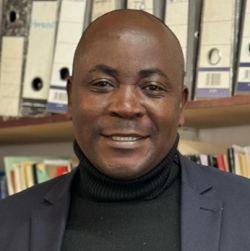
Joshua Chakawa is a Senior Lecturer in the Department of Historical Studies at the National University of Lesotho, where he has taught since 2022. He previously served as Senior Lecturer and Head of the History Department at Midlands State University in Zimbabwe, where he contributed to scholarship on African borderlands, post-colonial conflict, and historical memory. Dr. Chakawa’s research focuses on Zimbabwe’s liberation war, Gukurahundi, disputed elections, peace and conflict studies, and the role of history education in fostering reconciliation and social healing. His work engages the lived experiences of communities affected by violence, silence, displacement, and contested memory, with a particular interest in how historical inquiry can support peacebuilding, transitional justice, and post-conflict recovery. He also writes on cross-border dynamics in Southern Africa and broader questions of decoloniality, governance, and curriculum transformation in peace education. His scholarship seeks to connect historical analysis with practical pathways toward healing, justice, and sustainable peace in Zimbabwe and the wider region.