
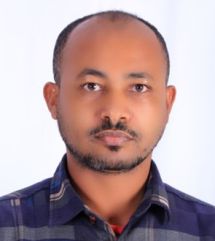
Hailay Tesfay Gebremariam
Ethiopia, Ph.D., Associate Professor at College of Social Science and Humanities, Arba Minch University, Arba Minch, Ethiopia 2025
A Rite of Reconciliation: The Symbolic and Practical Efficacy of “Wet Grass” in Southern Ethiopian Conflict Resolution
Project Description
This research project investigates the symbolic and practical efficacy of 'wet grass', a traditional and non-violent conflict resolution ritual practiced in select Gamo communities of Southern Ethiopia. The study addresses the critical gap in peace research concerning indigenous peacebuilding methods by asking: How does this ritual function as both a powerful symbolic rite and a practical tool to de-escalate conflicts and achieve durable reconciliation? Employing a rigorous qualitative, ethnographic approach—including participant observation, semi-structured interviews with elders and conflict participants, and focus group discussions—the project seeks to thoroughly document the ritual's procedures, analyze its deep cultural meanings, and evaluate its effectiveness in fostering "positive peace" by restoring relationships. The findings will contribute to peace theory and inform policy by developing a framework for integrating successful, culturally-grounded indigenous mechanisms into broader peace and development initiatives.
Bio
Dr. Hailay Tesfay Gebremariam is an Associate Professor at Arba Minch University, Ethiopia, where he brings an interdisciplinary approach to Language Education and Social Psychology. His extensive academic background includes a Ph.D. in TeAm and dual M.A. degrees in Social Psychology and Applied Linguistics. This unique academic intersection allows him to explore the complex socio-psychological factors that influence human interaction and cultural practices. As a dedicated researcher, Dr. Hailay serves as a Principal Investigator focusing on Traditional Conflict Resolution Mechanisms. His work bridges the gap between theoretical frameworks and indigenous social systems to foster practical peacebuilding. His contributions to the field have been recognized with prestigious honors, including the 2025 International Peace Research Association Foundation (IPRAF) Peace Research Grant and the 2025 Biochemical Society Diversity in Science Grant.